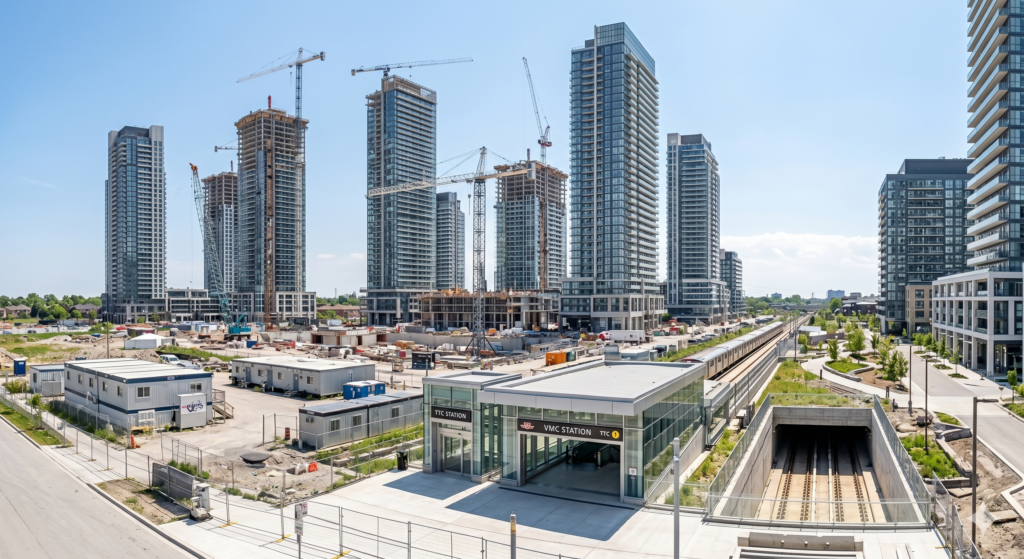
Vaughan has been the most active pre-construction condominium market in York Region since the Toronto-York Spadina Subway Extension opened in 2017. The Vaughan Metropolitan Centre alone accounts for more than 12,000 units in various stages of pre-construction or interim occupancy as of 2025, with adjacent activity in Concord, Maple and along Highway 7.
Pre-construction agreements in Vaughan are drafted by developer counsel and presented to buyers as final. The standard agreement runs 80 to 130 pages. Inside it sit assignment provisions, capped and uncapped levies, occupancy fees, HST rebate assignments, deposit structures and closing conditions. A buyer who signs without legal review accepts the developer’s draft. Once the ten-day rescission window under the Condominium Act closes, the agreement is fixed.
The Ten-Day Rescission Window
Every pre-construction condominium purchaser in Ontario receives a ten-day rescission period after signing, or after delivery of the disclosure statement, whichever is later. The right is absolute. A buyer who walks within ten days recovers the full deposit and owes nothing further. The window exists for the buyer to identify issues serious enough to walk from.
The rescission window is not a negotiation period. The agreement does not change inside it unless the developer voluntarily amends — and developers in Vaughan rarely do. A Vaughan real estate lawyer reviewing the agreement during the window focuses on three categories of risk: assignment terms, capped levies and adjustments, and occupancy structure. Each is the subject of negotiation at signing or it is accepted as drafted at closing.
Capped Levies: The $30,000 Question
Pre-construction agreements in Vaughan typically allow the developer to pass through municipal levies, regional development charges, education levies, utility hookup fees and Tarion enrolment to the buyer at closing. Without a cap, the figures are open-ended. Development charges in York Region rose 35 percent between 2021 and 2024. Buyers who signed in 2020 or 2021 without negotiated caps have faced closing adjustments above $50,000 on individual VMC closings.
Most developers will agree to a cap when a buyer’s lawyer requests one — usually a fixed dollar amount, sometimes a percentage of the purchase price. The cap negotiation happens during the rescission window. By the time the closing notice arrives three years later, the agreement has long since closed.
HST Rebates and the Investor Question
The federal-provincial new housing rebate on a Vaughan condominium can reach approximately $24,000. Eligibility depends on principal residence occupancy by the buyer or long-term residential leasing. The buyer’s intent at signing is not the legal test — the test is what the buyer actually does at occupancy.
The developer typically credits the rebate against the purchase price on the statement of adjustments and files the claim itself based on an assignment from the buyer. If the buyer fails the eligibility test — through assignment before closing, short-term rental, or non-resident status under the Excise Tax Act — the rebate must be repaid. The Canada Revenue Agency has audited assignment chains aggressively since 2022 and treats certain assignment patterns as taxable supplies. The lawyer reviews eligibility and rebate documentation in the lead-up to closing.
Interim Occupancy and Occupancy Fees
Vaughan condominium projects almost always involve interim occupancy. The buyer takes possession of the unit, pays a monthly occupancy fee covering interest on the unpaid balance, estimated common expenses and estimated property tax, and waits — sometimes 18 to 24 months — for the building to register as a condominium corporation. Until registration, the buyer cannot register a mortgage and does not hold title.
Interim occupancy fees do not build equity. They are disclosed in the agreement but the calculation methodology is technical. The Real Estate Council of Ontario has flagged interim occupancy fees as one of the most misunderstood costs in the pre-construction market. The lawyer walks the buyer through the calculation and the implications before signing closes the rescission window.
Tarion Coverage and Pre-Delivery Inspection
Every new condominium unit in Ontario must be enrolled with Tarion under the Ontario New Home Warranties Plan Act. Coverage runs in tiers: deposit protection during construction up to specified limits, one-year warranty on workmanship, two-year warranty on major systems, seven-year warranty on major structural defects.
The lawyer confirms enrolment, reviews the Pre-Delivery Inspection package and ensures the warranty registration carries through to the buyer’s name on closing. Tarion deficiency claims are time-limited — 30 days for the first-year submission, 11 months for the year-end submission. A buyer who misses the deadlines loses coverage for items that should have been listed.
Lender Funding at Final Closing
Lenders treat pre-construction final closings as conditional advances. The mortgage commitment letter issued at the agreement stage may be 24 to 36 months old by the time final closing arrives. Most lenders re-underwrite the borrower at closing, reviewing income, debt service and credit. Where the borrower’s financial circumstances have changed, the lender may withdraw the commitment.
Vaughan pre-construction buyers who signed at 2020 or 2021 prices have, in some cases, faced appraised values below the agreement price at closing in 2024 and 2025. The shortfall — sometimes $50,000 to $100,000 on VMC units — must be covered from the buyer’s equity. The lawyer reviews the appraisal, identifies the shortfall and structures the closing to address it.
Working With a Vaughan Real Estate Lawyer
Mayo Law represents pre-construction purchasers across Vaughan, including projects in the Vaughan Metropolitan Centre, in Concord, in Maple, and along the Highway 7 corridor. The firm reviews agreements during the rescission window, manages interim occupancy and final closings, registers charges on title at registration, and handles HST rebate documentation.
A pre-construction agreement signed in 2025 closes in 2027 or 2028. The market, the lender environment and the buyer’s personal circumstances will all have changed. Buyers who engage a Vaughan real estate lawyer at signing — within the rescission window — have caps, occupancy term limits and exit options that buyers who wait until closing do not.