If you’re searching for an immigration lawyer nyc residents and business owners can rely on, you’re probably dealing with more than a form. You may be hiring a Canadian executive for a New York office, trying to keep a family together, or discovering that a past criminal case now affects immigration status. In New York City, immigration problems rarely stay neatly inside one category.
At Mayo Law, our attorneys work with individuals, families, founders, and SMEs moving between New York and Ontario. That cross-border perspective matters. A visa strategy may affect payroll, equity, travel, tax planning, family timelines, or even how a transaction is documented. The right legal approach usually starts with seeing the whole picture early, before a filing problem becomes a court problem.
Navigating the Complex World of NYC Immigration
A common NYC scenario looks like this. A founder has a growing business in Toronto, wants to open in Manhattan, and assumes immigration is just a matter of choosing the right visa. Then questions pile up. Should the company use an investor route, a transfer route, or an employment-based path? Who can enter first? What happens if the spouse needs work authorization? How do travel plans affect timing?
For individuals, the pressure feels different but no less serious. A marriage case may involve prior entries, prior filings, or old records that don’t line up cleanly. A green card holder may face international travel concerns. Someone with a criminal matter may learn that the immigration issue isn’t secondary at all.
New York adds speed and scrutiny. Deadlines matter, records matter, and small inconsistencies often create outsized delays. A skilled immigration lawyer doesn’t just prepare forms. Counsel identifies risks, builds a sequence, and decides what needs to be solved first.
Practical rule: The best immigration strategy usually begins before filing. It starts with document review, status analysis, and a realistic timeline.
That is why many well-informed clients look for counsel who can connect immigration to business operations, family goals, and compliance obligations at the same time.
Understanding the Scope of Immigration Law in NYC
NYC immigration practice is broad. Most clients do better when they break the field into a few practical buckets rather than treating it as one giant system.
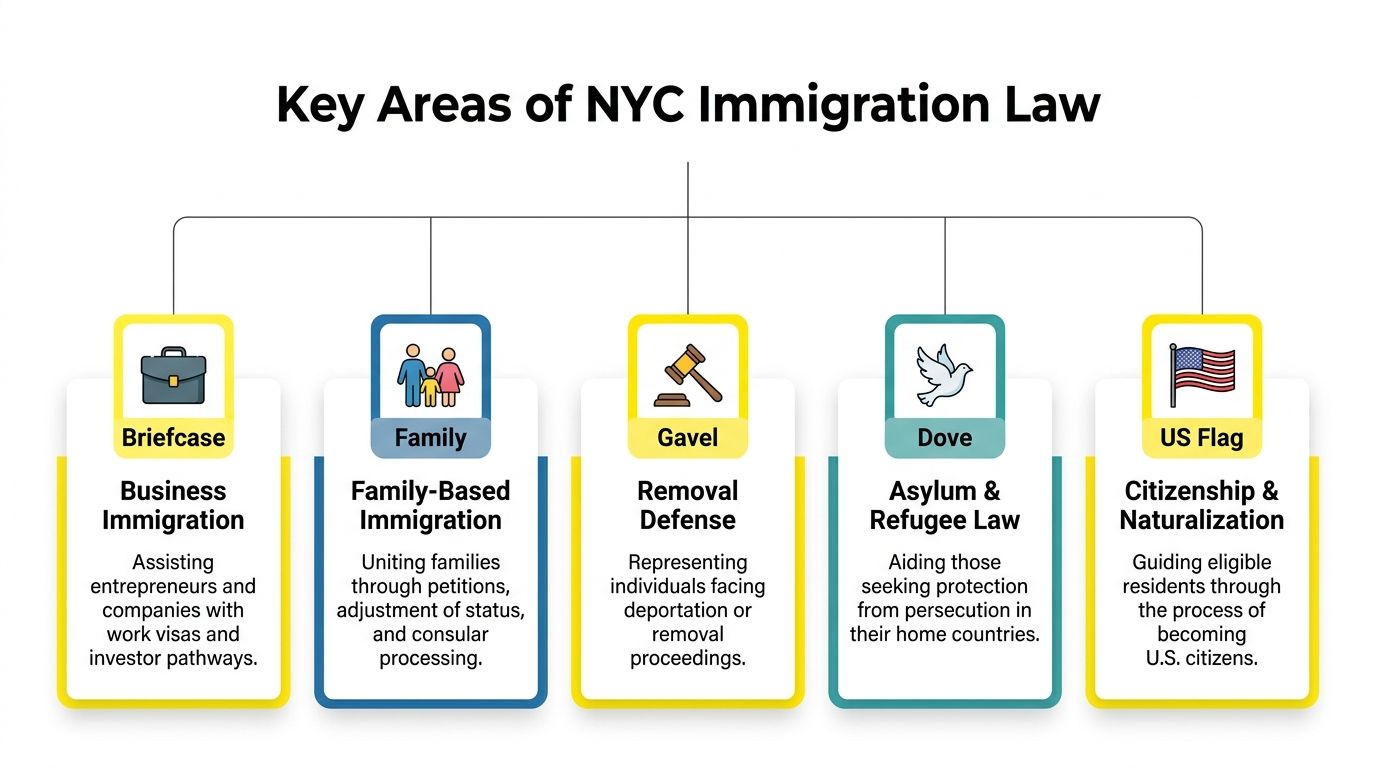
Business immigration
This covers work-authorized entry and long-term planning for founders, executives, professionals, and employers. It includes investor options, intracompany transfers, and employer-sponsored cases. For some employers, options such as a cap-exempt H-1B pathway may be worth evaluating depending on the role and organization.
Family-based immigration
Family cases often involve spouse petitions, petitions for parents or children, adjustment of status, and consular processing. These files may look personal, but they still depend on records, timing, and procedural consistency.
Removal defense
When someone is already in proceedings, the work changes completely. The focus shifts to defending status, preserving relief, addressing court deadlines, and protecting the client’s ability to remain in the United States.
Asylum and humanitarian matters
These cases involve protection-based claims and other forms of relief for vulnerable applicants. They are fact-intensive and often require careful evidence development.
Citizenship and naturalization
Some clients don’t need a visa strategy. They need to confirm eligibility for citizenship, fix old issues in their record, or prepare for naturalization without triggering avoidable complications.
New York’s legal environment stands out. More than 74% of immigration court cases in New York State have attorney representation, and just 28% receive removal or deportation orders, according to WNYC’s reporting on legal representation in New York immigration court. In practice, that means representation isn’t treated as optional here. It’s part of how serious cases are handled.
Navigating Employment and Investor Visas for Businesses
For businesses, the right visa depends on the commercial objective. Some companies need a founder in market quickly. Others need to relocate an executive, sponsor a specialized employee, or build a longer path toward permanent residence.

Choosing the right business pathway
An E-2 case is often about active investment and operating a real business. An L-1 case is usually about transferring a qualifying executive, manager, or specialized knowledge employee from a related foreign company. An O-1 filing turns on sustained distinction and evidence of extraordinary ability. An EB-5 strategy is different again because it centers on investment-based permanent residence and broader capital planning.
For founders and SMEs, the legal question is rarely just eligibility. It is sequencing. You may need one visa for market entry and another for long-term retention. That’s why companies often benefit from working with counsel who handles both immigration planning and business-side structuring, such as an immigration lawyer for business matters.
Where employment cases often go wrong
Employment-based permanent residence can become highly technical. Failure to comply with PERM labor certification recruitment and prevailing wage rules can lead to denial rates exceeding 30% annually and delays of 12 to 18 months, as described in this discussion of New York employment-based immigration practice.
That matters because PERM isn’t just paperwork. It requires alignment between the offered position, wage level, recruitment steps, and supporting business records.
What tends to work:
- Role definition that matches reality: Job duties should fit the actual business need and supporting documents.
- Early wage review: Employers should assess compensation issues before recruitment begins.
- Clean internal records: Corporate documents, payroll plans, and organization charts should tell the same story.
- Strategic sequencing: Some businesses may start with a nonimmigrant visa and prepare the green card track in parallel.
When a business visa case fails, the issue is often not ambition. It’s mismatch. The filing says one thing, the company records suggest another, and the timeline exposes the gap.
Family-Based Immigration and Removal Defense
Family immigration is often the most emotionally charged part of the system. A spouse petition or adjustment case may look straightforward from the outside, but prior travel, prior status issues, old filings, or criminal history can reshape the case quickly.

Keeping families together
Family-based work often involves immediate relatives, document-heavy filings, interview preparation, and careful attention to admissibility issues. For some clients, the next milestone after obtaining permanent residence is understanding the route to U.S. citizenship eligibility and process.
When criminal and immigration law collide
Removal defense becomes even more complex when a criminal case is part of the record. In NYC, so-called crimimmigration analysis matters because immigration consequences may turn on how an offense is classified, how a plea was entered, and what relief remains available. Evidence shows that 70% of non-citizen detentions by ICE stem from criminal convictions, and successful defense often depends on technical waivers and motions, as noted in this overview of deportation defense practice.
That is why criminal counsel and immigration counsel can’t work in silos. A plea that seems manageable in criminal court may create a deportability problem later. The legal issue is not only what happened. It is how the immigration statutes read that event.
Client-side takeaway: If there’s any arrest, plea, or conviction history, bring it up early. In immigration work, “minor” criminal issues sometimes aren’t minor at all.
The Mayo Law Advantage Cross-Border Expertise
Many NYC immigration resources still treat immigration as a stand-alone service. That approach misses how modern cross-border clients operate. A startup isn’t only filing a visa. It is hiring, signing leases, raising capital, drafting employment agreements, and moving people across the U.S.-Canada corridor at the same time.
Why integrated advice matters
The New York State Bar Association notes that “early identification of these issues is essential” in the context of immigration consequences across other legal matters, as discussed in its guidance on immigration issues lawyers need to spot early. That observation tracks what cross-border clients face every day.
A few examples make the point:
- Corporate transactions: Buyer diligence may need to review founder status, work authorization, and transfer plans.
- Employment agreements: Compensation structure, duties, and reporting lines can affect visa positioning.
- Criminal matters: Plea strategy may carry immigration consequences that change the whole defense posture.
- Family transitions: Marriage, separation, and relocation may affect filing strategy and timing.
For clients moving between Ontario and New York, integrated counsel may be more useful than separate advisors working in parallel. Firms such as Mayo Law’s EB-5 immigration attorney practice sit within a broader cross-border platform, which can matter when immigration planning intersects with business formation, compliance, or white-collar exposure.
How to Choose the Right NYC Immigration Lawyer
A lot of people start with the wrong question. They ask who is cheapest or who can file fastest. Those questions matter, but they shouldn’t come first. The better question is whether the attorney understands the actual risk profile of your case.

What to evaluate in a consultation
The immigration bar is under pressure. Representation rates in the United States have fallen from 65% to 30%, and the national court backlog reached 3,287,058 cases by the end of December 2023, according to TRAC’s report on the attorney shortage and court backlog. In a market like New York, that means good counsel may be selective, and clients should come prepared.
Look for a lawyer who can explain:
- Your legal posture: What status do you hold now, and what are the weak points?
- The filing sequence: Which step comes first, and what depends on it?
- The evidence standard: What documents matter most for this type of case?
- The risk areas: Are there travel, timing, criminal, or employer-compliance concerns?
- The fee model: Is the matter handled on a flat-fee basis, hourly basis, or a mix of both?
Questions worth asking
Not every consultation needs the same script. But these questions usually produce useful answers:
- What facts could hurt this case if they aren’t addressed now?
- What documents should be reviewed before any filing begins?
- Are there immigration consequences tied to employment terms, travel, or prior records?
- Which parts of the process are predictable, and which parts depend on agency discretion?
- If the first strategy doesn’t fit, what is the backup path?
A strong consultation doesn’t feel like a sales pitch. It feels like risk identification, prioritization, and a workable plan.
Key Considerations Before Engaging Counsel
Before you schedule a consultation, it helps to organize your side of the file. That saves time and gives the attorney a clearer factual record.
- Define your main goal: Are you trying to enter the U.S. for work, sponsor a family member, defend status, or plan for permanent residence? If you’re weighing investment routes, this comparison of E-2 visa vs. EB-5 visa options may help frame the business question.
- Gather every prior immigration record: Keep approval notices, denial notices, I-94 records, prior petitions, entry records, and correspondence in one place.
- Surface difficult facts early: Prior overstays, refusals, arrests, convictions, prior marriages, and inconsistent filings usually matter.
- Map your timeline: Business launch dates, family events, travel plans, and expiring status can shape the filing order.
- List related legal issues: Employment terms, ownership structure, pending litigation, or criminal exposure may affect the immigration strategy.
- Prepare targeted questions: Ask about process, evidence, sequencing, communication, and likely friction points.
Some clients want immediate answers. Most immigration matters don’t reward rushed assumptions. They reward complete facts and disciplined planning.
Frequently Asked Questions about NYC Immigration
Can I change my immigration status while in the U.S.
Sometimes, yes. Eligibility depends on your current status, your immigration history, and the category you want to move into. You may want to review current forms and instructions through USCIS immigration forms and filing guidance.
How long does an immigration case take in New York
Timelines vary widely by case type, agency, and whether the matter is in court, with USCIS, or through a consulate. Delays can also come from missing evidence, background issues, or case volume. Official timing tools and case updates are available through USCIS case processing resources.
Where can I find official immigration help in New York City
For city-based support and public information, many people start with the NYC Mayor’s Office of Immigrant Affairs. Official federal immigration information is generally best checked directly with USCIS.
Do I need an attorney for every immigration filing
Not every filing requires counsel. But legal representation becomes much more valuable when the case involves business structuring, prior denials, inadmissibility issues, criminal history, removal proceedings, or cross-border planning between the U.S. and Canada.
Ready to explore your options with an immigration lawyer nyc clients turn to for business, family, and cross-border matters? Mayo Law advises individuals, founders, and SMEs on U.S. immigration strategy with an integrated view of compliance, business planning, and cross-border risk. You can schedule a consultation with Mayo Law to discuss your circumstances.
LEGAL DISCLAIMER: The information provided in this article is for general informational and educational purposes only and does not constitute legal advice. Reading this article, visiting mayo.law, or contacting Mayo Law does not create an attorney-client relationship. The content of this article should not be relied upon as a substitute for professional legal counsel specific to your individual circumstances. Legal outcomes depend on the particular facts and circumstances of each individual case, and no attorney can guarantee a specific result. Laws, regulations, and legal procedures are subject to change and may vary by jurisdiction. If you require legal assistance, you should consult with a qualified attorney licensed to practice in the relevant jurisdiction. Mayo Law expressly disclaims any and all liability with respect to actions taken or not taken based on the contents of this article.