You may be living in Toronto while your spouse works in New York. You may be on a TN visa, crossing often, keeping two apartments because your jobs require it. Or you may be staring at an interview notice and wondering why immigration officers need to know who cooks dinner, how you split bills, or what side of the bed each of you sleeps on.
At Mayo Law, our attorneys see how stressful questions immigration marriage cases can become when a real relationship has to fit into a government file. The interview is personal because the stakes are personal. In the United States, marriage-based petitions make up a major part of the family immigration system. Spouses of U.S. citizens or lawful permanent residents received about 325,000 of the 649,000 family-based immigrant visas in a recent year, making marriage the largest family-based path, as noted by CLINIC’s discussion of sham-marriage red flags. For a broader view of U.S. options, see Mayo Law’s New York immigration services.

Your Guide to the Marriage Immigration Interview
What the interview is really testing
Most couples walk in thinking the officer is testing memory. That isn’t quite right. The officer is testing whether your relationship looks lived-in, consistent, and credible.
A genuine couple may forget a restaurant name, mix up a date, or remember a honeymoon detail differently. What usually matters more is whether the overall record makes sense. Your documents, your timeline, and your answers should point in the same direction.
Practical rule: Officers don’t expect perfection. They do expect a believable shared life.
Why this feels so intense
The interview can feel invasive because officers are comparing ordinary married life to patterns they know can signal fraud. That’s why harmless facts become important. Separate addresses, last-minute filings, missing financial records, or vague answers can make an officer slow down.
For U.S.-Canada couples, the pressure often rises because cross-border life rarely looks simple on paper. A commuter marriage, a temporary work visa, or a period of living apart for business reasons may be legitimate. It still needs to be explained clearly.
Why Immigration Officers Ask Such Personal Questions
Bona fide marriage in plain language
A bona fide marriage is a real marriage entered in good faith. In practical terms, it means the couple intended to build a life together, not secure an immigration benefit.
That legal standard shapes every interview question. Officers aren’t asking about your breakfast routine because they enjoy trivia. They’re looking for details that usually exist when two people share a household, finances, responsibilities, and family life.
In U.S. marriage cases, USCIS applies a presumption of fraud if the marriage was for immigration purposes, and the couple must prove by a preponderance of the evidence that the marriage is genuine. That means the relationship must be shown to be more likely than not bona fide, as described in this discussion of the presumption of fraud in marriage cases.
The burden is on the couple
That burden matters. The government doesn’t need to prove your marriage is fake before asking tough questions. You and your spouse need to present enough reliable evidence to show the relationship is real.
This changes how couples should prepare:
- Think in themes, not tricks. Officers want to see cohabitation, financial connection, continuity, and mutual knowledge.
- Explain unusual facts directly. If you lived apart for work, say so and support it with records.
- Treat the interview like evidence. Your answers are part of the file, not a casual conversation.
A strong case usually feels coherent before anyone reaches the interview room.
Personal questions usually have a purpose
Some questions test daily life. Others test whether your timeline developed naturally. Others focus on whether the file matches what you say in person.
For Canadian applicants, this can be surprising if they are used to thinking of common-law evidence, travel history, or cross-border commuting as normal. Immigration officers may still want a simple answer to a hard question: if this is a real partnership, how does your shared life work?
Common Marriage Interview Questions in the US and Canada
The themes are similar in both countries, even if the process and terminology differ. U.S. officers often focus heavily on legal marriage, filing history, and possible fraud concerns. Canadian officers may spend more time on cohabitation history in common-law cases. Either way, the questions immigration marriage applicants face usually fall into a few familiar groups.
Your relationship history
Officers often begin with the origin story.
- How did you first meet?
- When did the relationship become serious?
- Who proposed, and what happened?
- When did you decide to marry?
- Who attended the wedding or celebration?
- Did your families know about the relationship before marriage?
This part matters because a real relationship usually has a timeline that develops in an understandable way. If the story jumps from first meeting to marriage with very little context, officers may probe further.
Your daily life together
These questions test whether you function as a couple.
- What time does your spouse usually wake up?
- Who leaves for work first?
- Who usually cooks?
- How do you spend weekends?
- What did you do together last night?
- Who handles groceries or household errands?
The goal isn’t to catch tiny differences. It’s to see whether both spouses describe a similar routine.
If your marriage is genuine, your answers should sound natural, not rehearsed.
Shared finances and home
A shared household leaves traces. Officers often focus here because documents can support or undermine what you say.
| Topic | Questions you may hear |
|---|---|
| Home | Where do you live, who is on the lease, how many bedrooms are there, what does the bedroom look like? |
| Bills | Who pays rent, utilities, phone plans, or insurance? |
| Banking | Do you have joint accounts, and how do you use them? |
| Taxes | How do you file, and who prepared the return? |
| Property | Do you own a car or home together? |
For cross-border couples, this category often needs extra care. A Toronto lease and a New York sublet may be perfectly legitimate, but officers need to understand why two addresses exist and how the relationship still functions as one household.
Knowledge of each other’s lives and families
These questions are often personal but predictable.
- What are your spouse’s parents’ names?
- Have you met each other’s siblings?
- What does your spouse do for work?
- Does your spouse have allergies, medical issues, or habits you know about?
- When did you last see each other’s family?
- What holidays do you celebrate together?
Questions that surprise people
The most stressful questions are often the smallest ones. Officers may ask about furniture, toiletries, daily routines, or recent events. They do that because highly manufactured stories often collapse on ordinary details.
If your case involves common-law recognition in Canada, questions may also focus tightly on when cohabitation began, where you lived, and how you documented that period.
Red Flags That Can Trigger Extra Scrutiny
A red flag doesn’t automatically mean denial. It means the officer may stop taking the case at face value. In some files, that leads to a Stokes interview, where spouses are questioned separately and their answers are compared.
About 5-10% of marriage-based green card applicants are selected for these enhanced interviews, according to GC Interview’s statistics on Stokes interviews. Common triggers include living apart, minimal shared finances, and marriages that appear timed around immigration deadlines. If your file also includes prior status problems, visa overstay issues may complicate the story further.
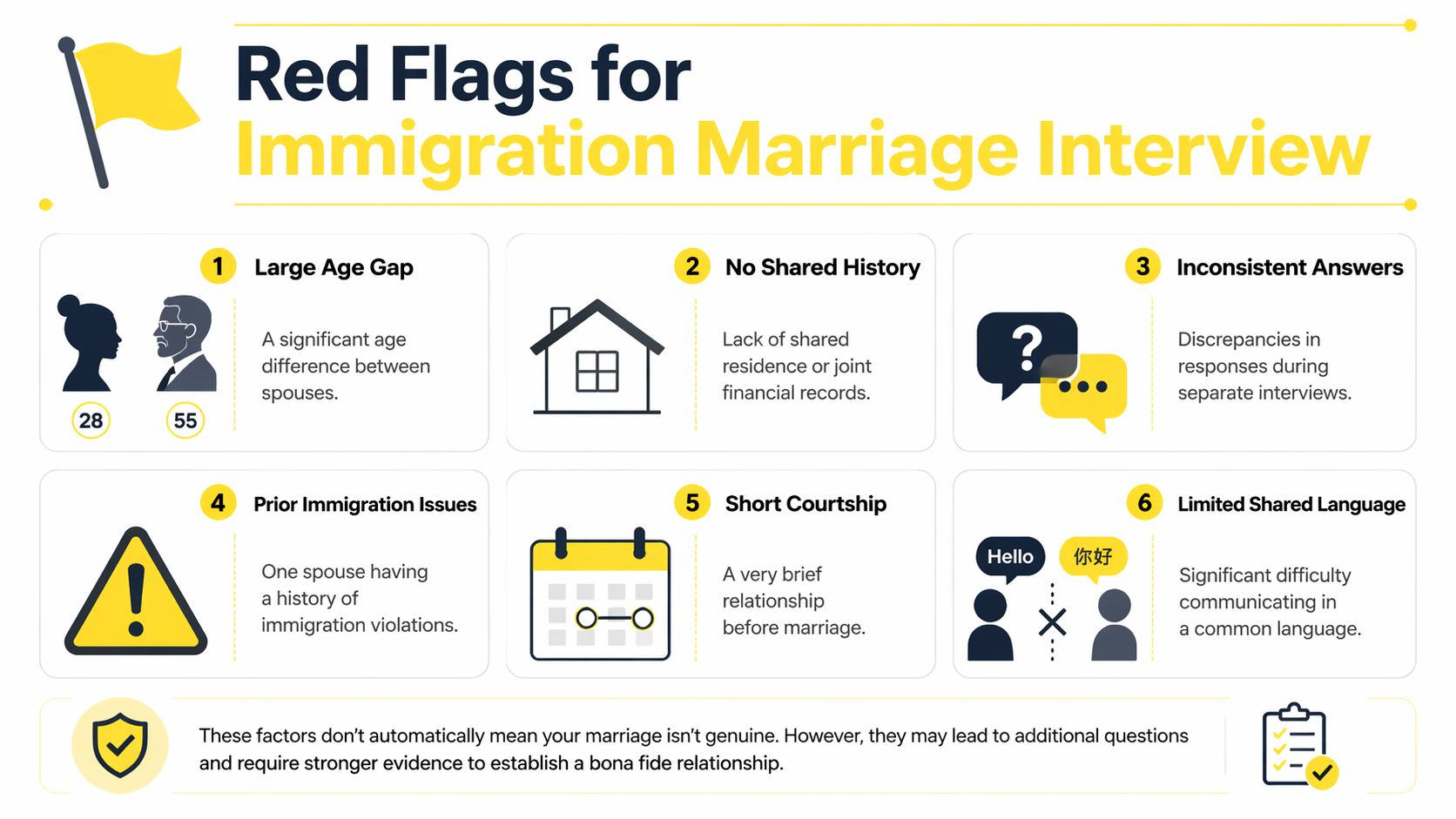
What officers tend to notice
-
Separate residences without a clear reason
This is common in cross-border careers. It isn’t fatal, but it needs documents, travel records, work explanations, and a credible routine. -
Little joint documentation
No joint bills, no insurance overlap, no lease connection, and no shared financial paper trail can make a marriage look thin. -
A rushed timeline
Quick marriages near visa expiration or after status issues often draw close attention. -
Communication barriers
If the couple has limited shared language, officers may ask how the relationship developed and how daily life works. -
Inconsistent answers
Major contradictions matter most, especially around addresses, jobs, family facts, and the relationship timeline.
The cross-border version of a red flag
Living in Toronto and New York at the same time isn’t suspicious by itself. The problem starts when the file doesn’t explain it. If one spouse works in Manhattan during the week and returns to Ontario often, the officer may want to see the practical structure of the marriage.
That can include lease records, travel itineraries, text logs, joint financial obligations, proof of visits with family, and a simple explanation that matches the paperwork.
Preparing Your Evidence and Your Answers
Good preparation isn’t about scripting. It’s about making the file easy to understand and making your answers sound like your real life.
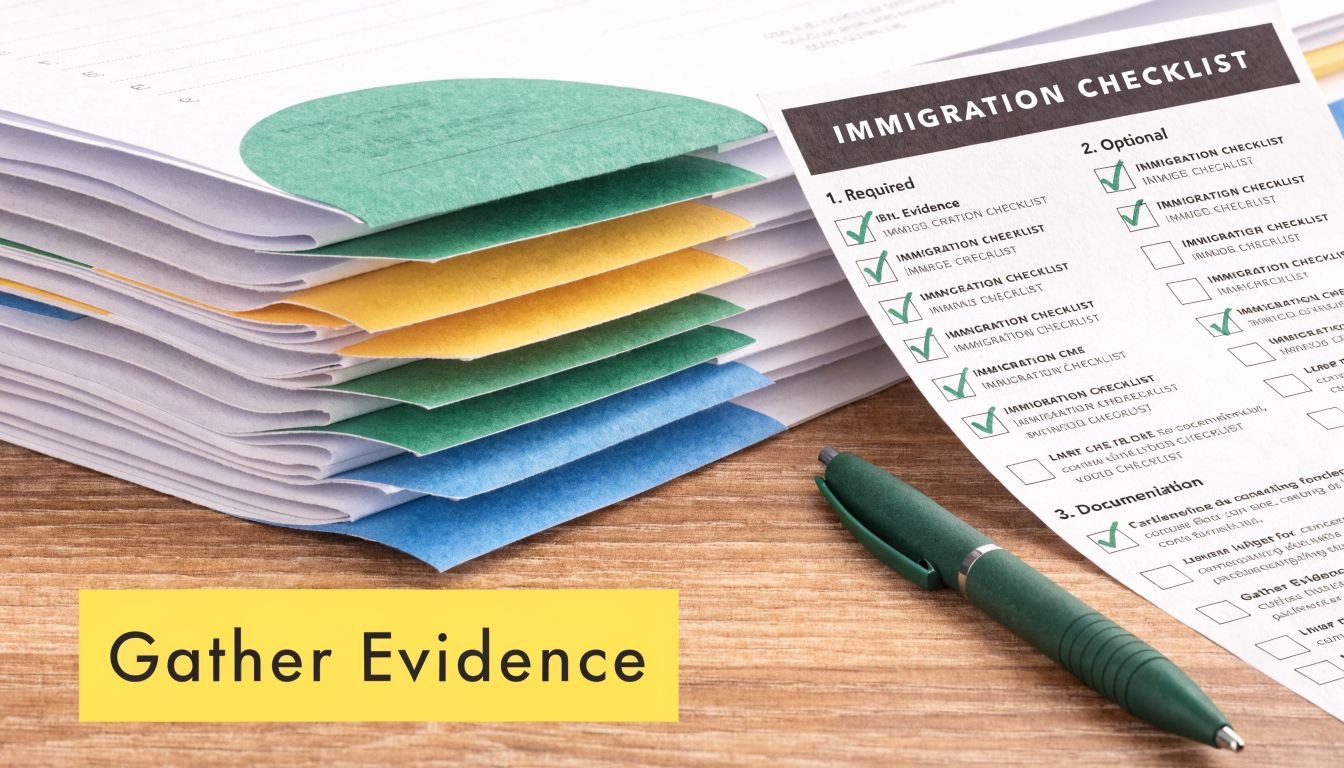
Your document checklist
Start with the strongest documents first, then fill gaps with supporting material.
-
Primary evidence
Joint lease or mortgage, joint bank statements, joint tax filings, insurance policies listing each other, and government mail showing the same address. -
Secondary evidence
Utility bills, car insurance, beneficiary designations, employer records, travel bookings, and school or medical records where relevant. -
Supporting evidence
Photos over time, event invitations, correspondence, affidavits from people who know the relationship, and screenshots that help explain cross-border routines.
A file should tell a story. If you maintained two residences for work, don’t bury that fact. Label it and explain it.
Tips for answering confidently
Couples often make the same mistake. They over-prepare the wording instead of reviewing the facts.
Consider these habits on interview day:
- Answer what was asked. Long speeches often create confusion.
- Don’t guess. If you don’t know or don’t remember, say that clearly.
- Stay consistent with the file. Review the petition and supporting forms before the interview.
- Use ordinary language. Robotic phrasing can sound coached.
- Pause when needed. Careful answers are better than fast ones.
Interview habit: Honest uncertainty is safer than a confident mistake.
Organize for access, not volume
Bring documents in a binder or folders with tabs. Separate identity documents, relationship evidence, financial records, and cross-border travel records.
For complex files, some couples use counsel for a focused prep session. That may include a timeline review, a mock interview, and a document index. Services like Mayo Law’s immigration counsel may assist with that kind of preparation alongside filing strategy.
Navigating Cross-Border Nuances for US-Canada Couples
The hardest questions immigration marriage cases often involve facts that aren’t suspicious in real life but can look unusual in a government file.
TN visa holders and temporary intent
A major issue for Canadian professionals is dual intent. TN classification is tied to temporary work in the United States. Marriage to a U.S. citizen or permanent resident doesn’t automatically create a problem, but it can trigger scrutiny over whether past entries and current intent line up.
One cited source notes that USCIS recorded over 15,000 spousal adjustments for Canadian nationals and that RFEs occurred in 28% of cases involving scrutiny over temporary intent and proof of a bona fide relationship, particularly when couples maintained cross-border residences, as discussed in this article on marriage interview issues for Canadian nationals.
Common-law in Canada and legal marriage in the US
Canada’s immigration framework recognizes common-law relationships in a way that often feels familiar to Canadian couples. The United States is usually more rigid in marriage-based green card filings. That difference can create confusion.
A couple may have years of real cohabitation in Canada but little U.S.-style joint documentation, or they may assume common-law proof carries over automatically. It usually doesn’t. The evidence has to be translated into the language the receiving system expects. For readers also reviewing status on the Canadian side, Mayo Law’s Canadian citizenship overview may be a useful starting point.
When two homes are legitimate
Executives, founders, healthcare professionals, and cross-border commuters often keep separate residences because the work is real, not because the marriage isn’t. The key is to show how the couple still functions as a unit.
That may include:
- Travel patterns that show regular time together
- Shared expenses across two countries
- Communication records during travel periods
- A clear explanation of why two addresses existed and for how long
Key Considerations Before Your Interview
Some preparation is legal. Some is practical. Both matter.
Considerations that often help
- Consider reviewing your relationship timeline together. Focus on major dates, moves, jobs, trips, and family events.
- Consider matching the interview prep to the file you already submitted. Inconsistency often starts when couples forget what the forms say.
- Consider organizing evidence by topic. Housing, finances, travel, photos, and family records are easier to discuss when grouped clearly.
- Consider preparing an explanation for anything unusual. Separate residences, prior marriages, name differences, or periods of unemployment should not surprise the officer.
- Consider discussing sensitive topics in advance. Health issues, prior immigration problems, and family tensions may come up.
For naturalization and longer-term planning
Some couples are already thinking beyond the marriage interview and into citizenship timing, travel, or future filings. In that situation, it may help to understand the broader path as well, including Mayo Law’s overview of how to get U.S. citizenship.
Small inconsistencies rarely destroy a strong case. Unexplained inconsistencies can.
Keep the standard in mind
You are not trying to perform a perfect marriage. You are trying to present a credible, documented one. That’s a very different mindset, and it usually produces better answers.
When to Seek Help from an Immigration Attorney
Some files are manageable with careful self-preparation. Others carry legal and factual issues that make professional help worth serious consideration.

Cases that deserve closer review
You may want to speak with counsel if any of these apply:
-
Prior immigration problems
Overstays, visa denials, prior petitions, or border issues often change the interview strategy. -
A second interview or separate interview notice
Once the case reaches that stage, preparation usually needs to be more precise. -
Major red flags in combination
A large age gap plus separate residences plus little financial overlap is different from any one factor alone. -
Unlawful entry or waiver issues
In more complex matters, a spouse may need an I-601A provisional waiver by showing extreme hardship to the U.S. citizen spouse. One cited source states denial rates are around 20-25% when hardship proof is insufficient, as explained in this discussion of marriage interview complications and I-601A preparation. For those seeking local support, Mayo Law’s immigration attorneys page outlines available services.
What counsel may add
An attorney may help identify weak spots before the officer does. That might mean reorganizing evidence, correcting a timeline problem, preparing for difficult questions, or addressing cross-border facts that could be misunderstood.
For U.S.-Canada couples, that’s often where legal help matters most. The issue isn’t just whether the marriage is real. The issue is whether the file explains a cross-border life in a way an officer can follow.
If you’re dealing with questions immigration marriage issues across New York and Ontario, Mayo Law may be able to help you assess the filing strategy, prepare for the interview, and understand how cross-border facts could affect your case. Schedule a consultation with Mayo Law to discuss your circumstances.
LEGAL DISCLAIMER: The information provided in this article is for general informational and educational purposes only and does not constitute legal advice. Reading this article, visiting mayo.law, or contacting Mayo Law does not create an attorney-client relationship. The content of this article should not be relied upon as a substitute for professional legal counsel suited to your specific circumstances. Legal outcomes depend on the particular facts and circumstances of each individual case, and no attorney can guarantee a specific result. Laws, regulations, and legal procedures are subject to change and may vary by jurisdiction. If you require legal assistance, you should consult with a qualified attorney licensed to practice in the relevant jurisdiction. Mayo Law expressly disclaims any and all liability with respect to actions taken or not taken based on the contents of this article.