Published: June 29, 2026
Updated: June 29, 2026
Read time: 12 minutes
A whistleblower complaint lands in your inbox on a Tuesday morning. It alleges fraud in a U.S. subsidiary, names two senior employees, and hints that records may already have crossed into Canada. Before anyone interviews staff or starts drafting summaries, the core question is practical: how do you investigate without creating a file your future opponent can demand?
That's where work product privilege matters. It protects certain litigation-preparation materials, but only if you handle the process correctly from the start. In cross-border matters, that's harder than most companies expect because documents move quickly between legal, compliance, HR, auditors, and outside consultants. At Mayo Law, we help companies in Toronto, the GTA, and across the border handle that problem with experience licensed in both Ontario and New York on a process that often spans both sides of the border.
Work Product Privilege vs Attorney-Client Privilege
Work product privilege protects documents and tangible things prepared in anticipation of litigation or for trial. It is a qualified protection, not an absolute one. By contrast, attorney-client privilege protects confidential lawyer-client communications for legal advice. Under the work product doctrine, fact material may be discoverable on a showing of substantial need and inability to obtain the equivalent without undue hardship, while opinion work product receives much stronger protection, as discussed by the Florida Bar Journal on the work-product privilege.
| Attribute | Work Product Privilege | Attorney-Client Privilege |
|---|---|---|
| What it protects | Documents and tangible things prepared in anticipation of litigation | Confidential communications between lawyer and client for legal advice |
| Purpose | Protects trial preparation, mental impressions, and case strategy | Encourages candid communication with counsel |
| Who it covers | Materials prepared by or for a party or representative, including some non-lawyers | The client’s privileged communications with counsel |
| Strength of protection | Qualified. Some fact work product can be discovered on a high showing | Stronger in scope, but fragile if confidentiality is lost |
| Waiver risk | Often waived by disclosure to an adversary or by conduct that increases that risk | Can be waived by disclosure to non-privileged third parties |
A common mistake is treating these as interchangeable. They aren't.
If your general counsel asks an employee for facts so legal advice can be given, attorney-client privilege may apply. If counsel or a consultant prepares an interview memo because litigation is expected, work product privilege may apply. One communication can sometimes raise both protections, but the tests are different and the waiver rules are not identical.
Practical rule: Don't label everything “privileged” and assume that fixes the problem. Courts look at purpose, context, and who received the material.
This distinction matters most in investigations involving fraud, employee misconduct, sanctions issues, or internal accounting concerns. Those matters often produce timelines, witness summaries, and chronologies that become central in later disputes. If those materials are prepared casually, they can become a roadmap for the other side. For related investigation issues, see white collar defense work.
The Core Elements of Work Product Privilege
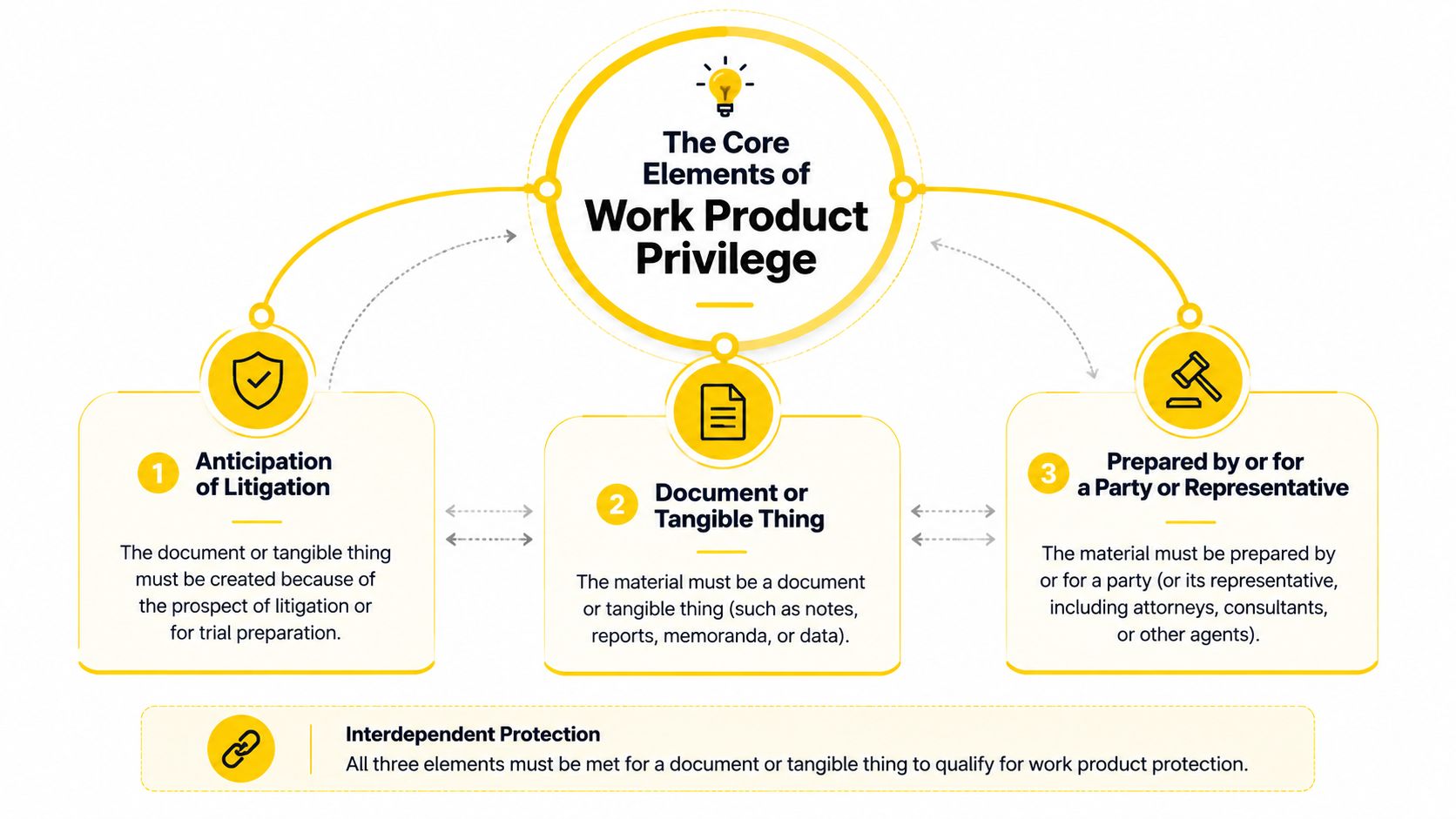
Federal work product protection generally focuses on documents and tangible things prepared in anticipation of litigation or for trial. In practice, most disputes turn on three questions: why the document was created, who created it, and whether it contains facts or legal thinking.
What does in anticipation of litigation mean
A document is not protected just because litigation later happened. The trigger is anticipation of litigation, and that requires an identifiable prospect of litigation based on the facts, not routine business activity. A document's primary purpose must be motivated by that anticipated dispute, as explained in this primer on the work-product privilege.
That sounds straightforward. It rarely is.
If your compliance team creates a quarterly incident report because company policy requires it, that usually looks like ordinary business. If outside counsel directs a focused witness interview memorandum after a regulator contacts the company or after a credible fraud allegation surfaces, the argument for work product is much stronger.
The safest approach is to identify the trigger clearly. That might be a demand letter, a threatened claim, a subpoena, a whistleblower report with concrete allegations, or a regulator's inquiry. If no one can later explain when litigation was reasonably anticipated, the privilege claim weakens fast.
Who can create protected work product
Many executives assume only lawyers can create work product. That's too narrow.
The doctrine can extend to materials prepared by or for a party or its representative, which may include investigators, consultants, and employees working at counsel's direction. That point matters in internal investigations because the first people gathering facts are often not litigators. They may be in compliance, internal audit, HR, cybersecurity, or finance.
Here's the catch. The broader the circle, the more discipline you need.
- Use counsel-led instructions: If a forensic accountant, investigator, or consultant is involved, define in writing that the work is for anticipated litigation.
- Limit circulation: A protected memo loses value if it's sent to a broad operations list.
- Separate roles: A dual-purpose document that mixes legal preparation with routine management reporting creates avoidable arguments.
An anonymized example makes the point. A Canadian affiliate's compliance manager interviewed employees after a suspected kickback issue. The notes were later edited into a business-facing remediation update for executives in both countries. By the time litigation started, the company had difficulty arguing the materials were created mainly for litigation rather than operations.
For adjacent disputes involving confidential business information, see trade secret misappropriation issues.
What is the difference between fact and opinion work product
This is the distinction that often decides discovery fights.
Fact work product includes factual chronologies, witness summaries, and investigative compilations. It can sometimes be discovered if the other side shows substantial need and cannot obtain the equivalent without undue hardship. Opinion work product includes an attorney's mental impressions, conclusions, opinions, or legal theories. That category receives much stronger protection.
A witness summary that simply records what was said is different from a memo showing why counsel believes one witness is credible and another is dangerous at trial.
That difference should shape how you draft. Keep raw facts, source documents, and legal analysis in separate files where possible. When they're mashed together, you invite a fight over the whole package.
Navigating Jurisdictional Divides in the US and Canada
A U.S. parent orders an internal investigation after a whistleblower complaint. Interviews start in Chicago. The underlying conduct touches a Canadian affiliate, so the interview notes, consultant drafts, and status updates are soon circulating in Toronto as well. That is usually the point where companies learn that a document handled one way for U.S. litigation may be treated very differently once a Canadian court, regulator, auditor, or local management team enters the file.
How does the U.S. federal rule frame work product
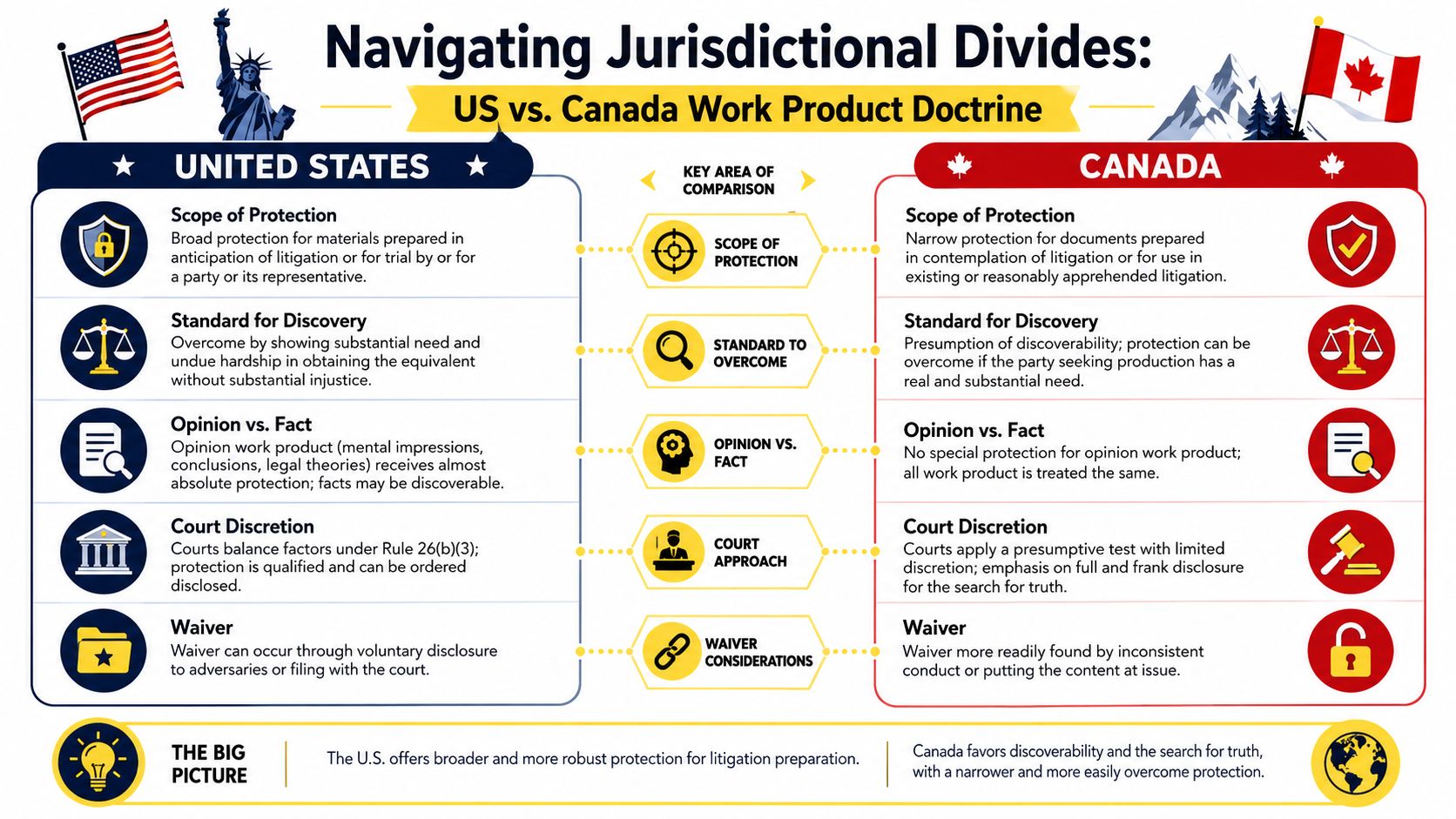
In U.S. federal court, work product protection is governed by Federal Rule of Civil Procedure 26(b)(3)(A). It protects documents and tangible things prepared in anticipation of litigation or for trial. A party seeking disclosure must show substantial need and inability to obtain the substantial equivalent without undue hardship, as summarized by Cornell Law School's explanation of attorney work product privilege.
That rule gives companies a usable framework, but the hard fights usually turn on purpose and handling. Courts ask why the document was created, who directed it, and whether it stayed inside a legal channel built for expected litigation.
What changes in cross-border practice
Cross-border files create pressure fast because one set of facts often has five audiences. U.S. counsel may want interview memoranda for litigation. A Canadian affiliate may want the same material for employment action, board updates, insurer notice, remediation planning, or a regulator response. Once the document starts doing all of those jobs, the protection analysis gets harder.
The practical risk is even higher where non-lawyers generate the first record. In real investigations, the first draft often comes from compliance, internal audit, HR, a forensic accounting team, or an outside investigator retained to support counsel. That can still be protectable, but only if the record shows the work was done for expected litigation and under a legal structure that supports that position.
I often tell clients to assume the most disclosure-prone forum will test the file first. That approach is conservative, but it usually saves the better argument later.
An anonymized example shows why. A New York company receives allegations of revenue manipulation. Outside counsel retains a consultant to conduct interviews and prepare a draft findings memo. The company then shares the draft with Canadian management, an outside auditor, and a team preparing communications for a regulator. In a U.S. proceeding, the company may still argue the document was prepared because of anticipated litigation. In an Ontario proceeding, the same sharing pattern may prompt a much sharper challenge to whether the document kept its protected character.
Do Ontario and New York treat the same document the same way
Often no.
Ontario and New York may examine similar themes, but they do not always treat mixed-purpose documents, third-party involvement, or internal circulation the same way. A record created for counsel can become harder to defend if it is later reused for routine business purposes, especially across affiliated entities in two countries.
That is why structure matters at the front end. Decide who is directing the investigation. Define which non-attorney contributors are working for counsel. Keep legal reporting lines separate from ordinary operational reporting. If the matter could end up in more than one forum, document the anticipated disputes early and draft with those forums in mind. For related questions about where litigation should proceed, see this forum selection clause guidance.
Can generative AI complicate the analysis
Yes.
If a team uses AI tools to summarize witness notes, organize interview themes, or draft chronologies, the privilege issue is no longer limited to whether the output reflects legal work. The analysis also turns on where the data went, what the tool provider can access, whether the material was reused outside the legal team, and whether cross-border transfers created another disclosure point.
In U.S.-Canada matters, that is a real risk management issue, not a theoretical one. Treat AI-assisted investigation materials the same way you would treat any sensitive litigation file. Limit inputs, control access, and avoid dropping protected content into systems the company would struggle to defend in a later waiver dispute.
Common Pitfalls and How to Avoid Waiver
A common failure point looks ordinary at first. U.S. counsel commissions an internal investigation, a consultant prepares interview summaries, and someone forwards the draft to Canadian management, HR, and an outside auditor so the business can respond quickly. By the time regulators or civil plaintiffs ask for the file, the company is arguing about circulation, purpose, and whether the document still reflects protected legal work at all.
What happens when you disclose to third parties
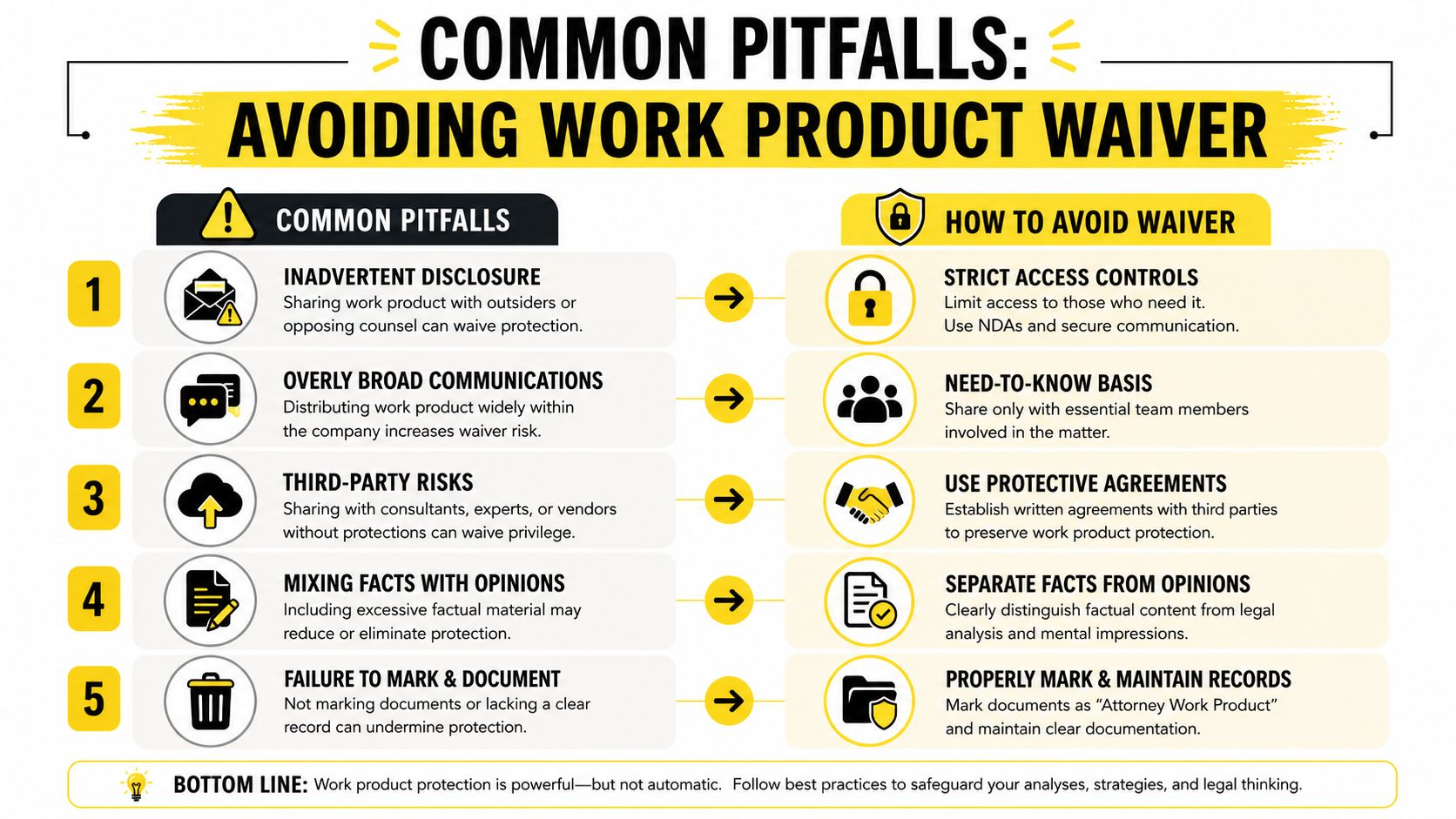
Disclosure creates the hardest waiver fights. The risk is highest when material reaches an adversary, but companies often lose ground well before that point by sharing documents in ways that make later disclosure easier to argue.
Cross-border matters make that problem worse. A recipient may look aligned in the moment, yet still sit outside the protected legal channel. Auditors, lenders, insurers, transaction counsel, foreign parent entities, and regulators often want the same chronology or investigative report for different reasons. Giving each group the same memo is efficient. It also gives the other side a stronger argument that the document served a business, regulatory, or commercial purpose beyond anticipated litigation.
Use narrower alternatives where possible:
- Give facts, not the memo. An oral briefing or short factual summary usually creates less waiver risk than circulating the full investigation report.
- Prepare separate external materials. Submissions to regulators, insurers, or lenders should be drafted for that audience, not lifted from internal legal analysis.
- Set limits in writing. If disclosure cannot be avoided, identify the recipient, the purpose, and any restriction on further sharing before the document goes out.
Why is in-house counsel often the flashpoint
In-house lawyers sit close to business decisions, so their communications are tested harder.
An email that mixes legal analysis with staffing decisions, public messaging, accounting treatment, and commercial strategy gives the other side room to argue that the message was mainly operational. Labels help with handling. They do not fix a bad record.
Keep legal requests separate from business instructions. A separate email chain for counsel's analysis and a different chain for implementation can feel cumbersome during a fast-moving issue. In discovery, it is often the difference between a focused privilege position and an expensive document-by-document fight.
Does the crime-fraud exception matter in internal investigations
Yes.
Work product protection does not cover material used to further wrongful conduct. If an investigation surfaces active document destruction, false entries, coached witness accounts, or similar conduct, counsel should shift from routine fact gathering to containment, remediation, and governance. The priority is to stop the conduct and create a defensible response. Privilege labels will not protect material tied to ongoing misconduct.
How should you handle non-attorney work product
This issue is often mishandled. In cross-border investigations, some of the most sensitive material is created by people who are not lawyers: forensic accountants, investigators, HR, compliance, internal audit, e-discovery vendors, and industry consultants.
Those materials can still be protectable if they are prepared for counsel in anticipation of litigation and kept within a disciplined legal process. The problem is usually not authorship alone. The problem is weak structure. If a consultant interviews witnesses without a clear retention path through counsel, or if HR notes are later reused for employee relations or business planning, the company makes the record harder to defend.
Set that up early. Have counsel retain the non-attorney contributor where possible, define the assignment in writing, state that the work is being performed for legal advice or anticipated litigation, and keep distribution tight. In U.S.-Canada matters, avoid sending draft interview notes or chronologies across broad business groups in both countries just because everyone wants visibility. Wide circulation creates exactly the waiver dispute you will later have to explain.
If the company is already dealing with agency scrutiny, review these practical steps on what to do if you're under federal investigation.
Practical Steps to Preserve Work Product Protection
When a matter may become contentious, process matters as much as doctrine. The companies that preserve work product well usually do ordinary things with unusual discipline.
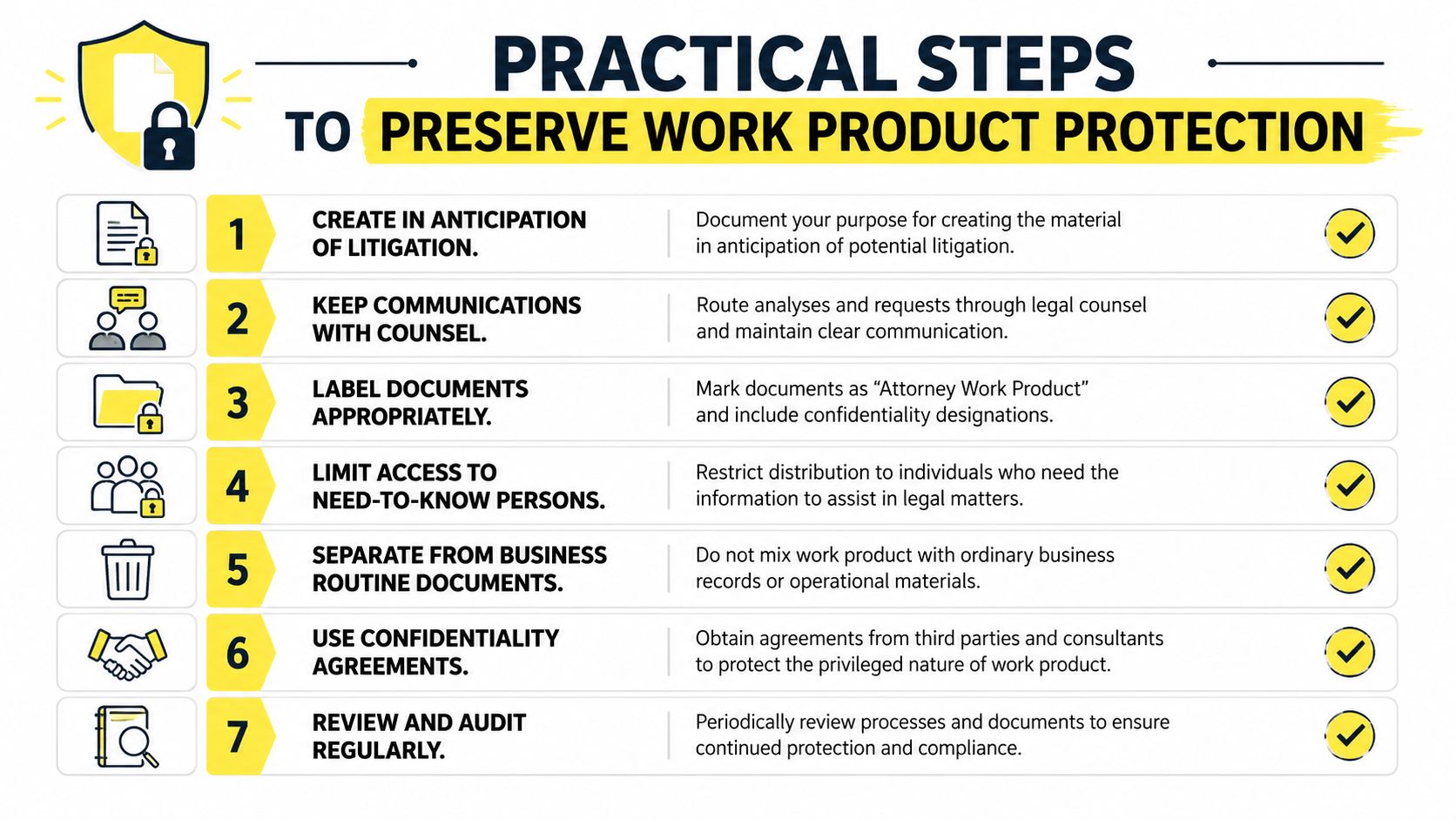
How do you preserve work product protection in practice
- Identify the trigger event. Record when litigation became reasonably anticipated and what caused that shift.
- Issue a litigation hold. Tell custodians what to preserve, where relevant data sits, and who directs the process.
- Use a clear legend. A practical example is: Privileged & Confidential // Attorney Work Product Prepared in Anticipation of Litigation.
- Have counsel retain key third parties. That includes forensic accountants, investigators, and e-discovery vendors.
- Separate facts from legal theories. Keep witness summaries apart from attorney impressions where possible.
- Restrict circulation. Need-to-know lists beat wide internal distribution.
- Maintain a privilege log early. Don't wait until production deadlines force reconstruction.
Do labels alone protect a document
No. They help, but they don't decide the issue.
A useful label signals intent and improves internal handling. It also reminds recipients not to forward casually. But if the document was created for routine business purposes, or if it is shared too broadly, the label becomes decoration.
Why should you keep facts and analysis separate
Because the doctrine protects certain materials, not the underlying facts themselves. A memo analyzing facts may be shielded, but the facts can still be discovered through depositions, interrogatories, and other means, as explained in this discussion of documents, tangible things, and discoverable underlying facts.
That means your interview outline, source documents, and attorney commentary should not all live in one blended file if you can avoid it. A clean structure makes privilege easier to defend and production easier to manage.
A simple operating checklist helps:
- For witness interviews: prepare one factual summary and a separate attorney evaluation.
- For board reporting: give legal conclusions in a controlled legal memo, not in a broad business deck.
- For consultants: use engagement letters that connect the work to counsel and anticipated litigation.
- For cross-border teams: decide in advance what can cross the border and who approves sharing.
Frequently Asked Questions
Can an email be considered work product
Yes, an email can qualify if it was prepared because of anticipated litigation and reflects litigation preparation rather than routine business operations. The harder cases are mixed-purpose emails. If the message combines business planning, HR issues, and legal analysis, a court may scrutinize its primary purpose closely. Shorter, targeted legal emails are usually easier to defend than broad chains with many recipients.
How much does it cost to litigate a work product dispute
There's no standard cost that applies across matters, and it would be risky to rely on anyone quoting a simple figure early. Cost depends on motion practice, volume of documents, urgency, and whether the court requires in camera review. The more practical point is that prevention is usually cheaper than litigating waiver after broad internal distribution.
Does work product protection expire
It can survive beyond the immediate dispute, but the answer depends on the jurisdiction, the document, and later disclosure. The stronger protection usually applies to attorney mental impressions and legal theories. The bigger practical risk is not expiration in the abstract. It's later conduct that weakens the claim, such as recycling old investigation materials into business files or sharing them with new third parties.
What happens if a document contains both business and legal analysis
That creates a mixed-purpose problem. Courts often look at the document's primary purpose and the context in which it was created. If the document mainly supports business operations, remediation, employment management, or investor relations, the work product argument gets weaker. Separate legal analysis from operational recommendations whenever possible. That extra discipline usually pays for itself in any later discovery dispute.
Are drafts of documents protected as work product
Often they may be, especially where the draft reflects legal strategy, attorney edits, or litigation-focused analysis. But draft status alone doesn't create protection. A draft prepared in the ordinary course of business is still vulnerable. If a draft is circulated widely for business comment, copied into presentations, or repurposed for external use, the claim becomes harder to sustain than a tightly controlled legal draft.
If your company is dealing with an internal complaint, regulator contact, or a cross-border investigation, early privilege planning can prevent expensive cleanup later. Mayo Law advises businesses and decision-makers on U.S.-Canada white-collar, compliance, and cross-border risk issues when the first few days matter most.
A credible complaint, regulator inquiry, or threatened claim creates pressure to act fast. That's exactly when work product mistakes happen. If you identify the litigation trigger, control who creates and receives investigation materials, and plan for U.S.-Canada disclosure risks early, you improve your position before the first discovery request arrives. The doctrine is useful, but only when the process behind it is equally careful.
How Mayo Law Can Help
Cross-border work product problems usually start before anyone realizes there is a privilege problem. A compliance lead retains an outside investigator. HR collects witness notes. A consultant prepares a timeline for management. By the time U.S. counsel is asked to assess exposure, sensitive material may already have been created, shared, or repurposed in ways that weaken protection.
Mayo Law helps businesses set up internal investigations and response processes so legal risk is addressed from the outset. That includes defining who is gathering facts, why documents are being created, how non-attorney work is directed and documented, and where U.S. and Canadian disclosure rules may diverge. For companies facing regulator contact, whistleblower allegations, threatened litigation, or parallel proceedings, those early choices often shape the privilege fight later.
The practical goal is simple. Build a record that supports protection where it should apply, and avoid preventable waiver where it should not. Mayo Law advises clients across Toronto, the GTA, and in U.S.-Canada matters where legal, compliance, and business teams need a disciplined process from day one.
Disclaimer
"This article is for informational purposes only and does not constitute legal advice. Every situation is different. Consult a licensed lawyer about your specific circumstances. Mayo Law provides legal services through Mayo Law PC in Ontario and Joseph Mayo PLLC in New York."
Related Articles
Cross-border work product issues rarely sit in one silo. Internal investigations often overlap with white collar exposure, international business operations, and broader compliance failures. These related articles address those adjacent risk areas:
- White collar defense lawyer Toronto
- International business legal services
- Regulatory compliance guidance, as noted earlier in this article.